Who Will Power the Digital Future? Pantheon and Grid Development Mark the Second Day of Dani OIE 2026 (RES Days 2026)
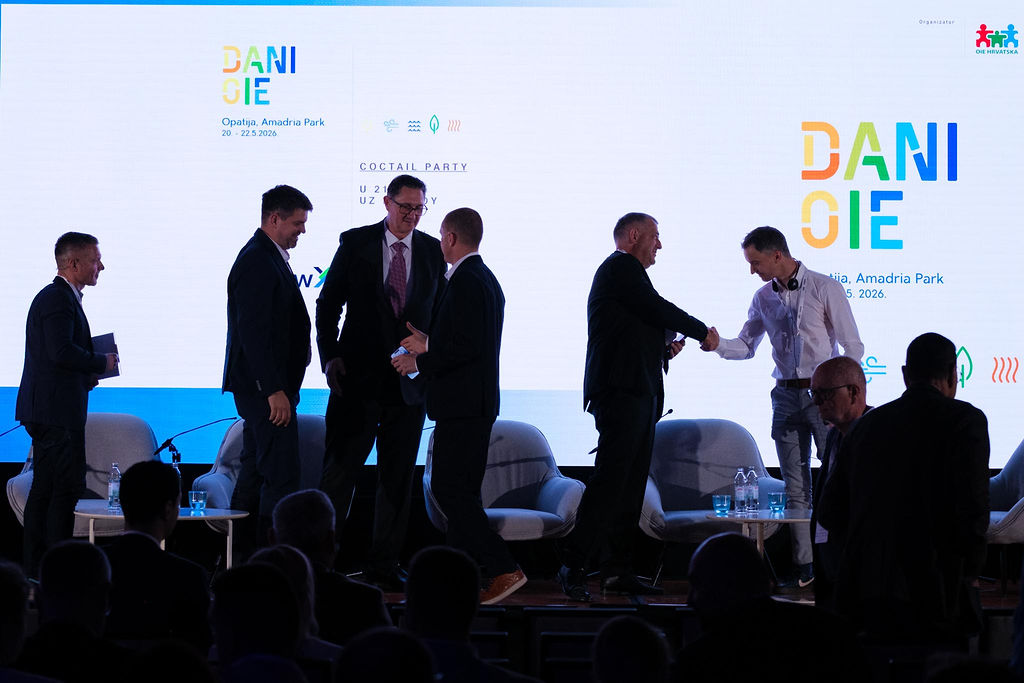
On the second day of Dani OIE 2026 (RES Days 2026), organised by Renewable Energy Sources of Croatia (RES Croatia), discussions focused on power grid development, flexible connection agreements for renewable energy sources, growth of data centres, role of battery systems, and integration of energy with tourism and agriculture.
The day opened with the interview with Ivica Rovis, Chief Advisor to the Minister at the Ministry of the Sea, Transport and Infrastructure, who emphasised that Croatia is currently undergoing the largest investments in transport and energy infrastructure so far.
– There is no energy development without the development of the transport system – Rovis stressed, highlighting key Ministry projects such as investments in the Port of Rijeka, the development of the lowland railway line, and connections to the LNG terminal on Krk.
This served as an introduction to the panel “Energy as the New Currency of Tourism” dedicated to the role of energy infrastructure and renewable energy sources in the development of tourism and transport.
Flavio Gregorović, Director of the Technical Sector at Valamar Riviera, emphasised that sustainability is becoming an increasingly important factor when it comes to choosing tourist accommodation. Asked whether it is true that 40% of tourists prefer facilities using renewable energy sources, he responded simply:
– That is what tourists look for and value – adding that the company has for years been strategically focused on decarbonisation and the use of renewable energy sources.
Changes in nautical tourism were addressed by Ivan Herak, member of the Management Board of ACI, which manages 22 marinas across the most attractive parts of the Adriatic coast. He recalled that in 2023 ACI adopted a development strategy in which the green transition was defined as a priority.
Ante Mandić, President of the Management Board of Petrol Croatia, pointed out that fossil fuels will remain an important part of the energy system for a long time, but also a key source of financing the transition to green energy. The company currently operates two wind farms and three solar parks, while preparations are also underway for the Dazlina wind farm project. Altogether, this amounts to around 100 MW of installed capacity, and by 2030 the company plans to invest 750 million euros, 40% of which is expected to be directed towards renewable energy projects.
The challenges of electrifying maritime transport were discussed by Marko Novaselić, member of the Management Board of Jadrolinija. He emphasised that ship electrification and the development of port infrastructure are among the company’s key priorities. He also noted that a tender procedure has been completed for the construction of the Dubrovnik–Elafiti passenger-cargo ship, which is being designed for fully battery-powered operation.
Ivan Šimić, Technical Director of EnergoVizija, spoke about the regulatory and financial challenges of renewable energy project development. Referring to the Croatian Energy Regulatory Agency’s (HERA) decision on grid connection, he described it as “a necessary, but not a sufficient condition” for resolving issues in the renewable energy production sector. He particularly warned about the uncertainty related to the ability to deliver electricity to the grid.
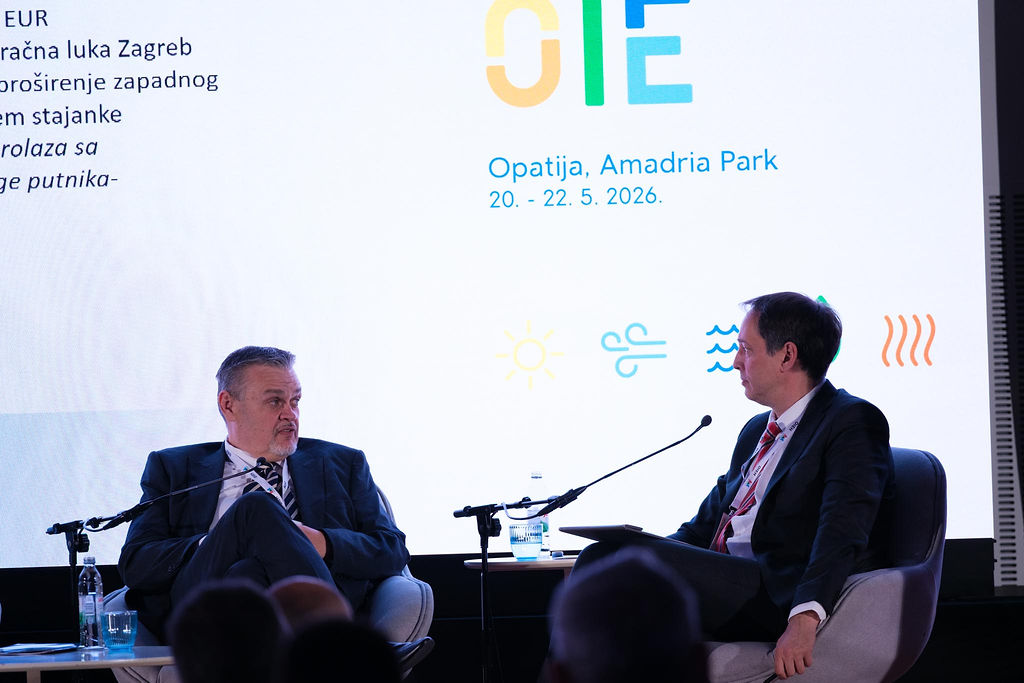
This panel was followed by an interview with Simone Dell’Atti, Principal Advisor for Equity Growth Capital and Project Finance at the European Investment Bank. According to Dell’Atti, financial institutions and the market are increasingly focused on ensuring that new projects include battery storage systems and grid flexibility capabilities. He emphasised that the European Investment Bank does not finance standalone battery systems, but rather projects in which batteries are connected to specific generation facilities.
The panel “Flexible Agreements for the Development of RES Projects” attracted significant interest, with participants discussing power grid constraints and new connection models for renewable energy projects. The central topic of the discussion was how to enable the connection of a large number of renewable energy projects in a situation where the grid no longer has sufficient capacity for the traditional connection model. Flexible agreements are therefore emerging as a possible solution, but investors and banks warned that it is crucial to clearly define when and to what extent network operators may limit electricity delivery, as the profitability and financing of projects depend precisely on such predictability.
Mladen Čavić, Head of the RES, Energy Efficiency and New Technologies Department at the Ministry of Economy, noted that the sector has been waiting for years for an ideal grid development solution, which resulted in grid connection delays of many years.
– Today, we can no longer create a ten-year plan, because it can change within a week – said Čavić.
Gaia D’Alfonso from SolarPower Europe noted that flexible agreements already exist in many European countries and that battery storage systems will play a key role in integrating renewable energy sources. Marko Janković from CWP warned that flexible agreements are not merely a technical issue of grid connection, but also a question of the electricity market model and the bankability of projects.
Igor Šumonja from HOPS highlighted that Croatia currently has around 4,000 MW of projects awaiting connection, but that only a smaller share of the applied projects is ultimately realised in practice. He added that over the past five years HOPS has secured 330 million euros from the National Recovery and Resilience Plan for the development of the transmission grid.
The panel “Who Will Power the Digital World?” also attracted considerable attention, focusing on the development of data centres and the sharp increase in electricity consumption driven by the growth of artificial intelligence. The topic of data centres and the Pantheon project marked a large part of the second conference day, with participants repeatedly highlighting it as a potentially the largest infrastructure and energy project in Croatia.
The discussions demonstrated that the development of major AI and data centre projects today directly depends on energy availability and power grid capacity, making grid development, for the first time, a matter of a country’s overall economic competitiveness.
Ante Čikotić from Inovapro presented the data centre development project in Čaporice, emphasizing that energy is becoming the key driver of new industries.
– When energy is available, almost anything can be achieved. It connects everything – said Čikotić.
Goran Đoreski from the Croatian Data Centre Association warned that the development of data centres in major European cities is slowing due to a lack of grid capacity.
– We no longer build in Dublin either – said Đoreski, stressing that parts of Croatia’s power grid have significant potential for the development of digital infrastructure.
Mario Gudelj, Director of Energy Projects at Pantheon, presented in more detail the data centre project currently being developed in Croatia, emphasizing that Pantheon could become a driver for the development of Croatia’s power grid, new generation capacity, and major investments. Speaking about the project, Gudelj stressed that today the development of data centres worldwide comes down to two key questions: whether a sufficiently large site is available and whether enough energy can be delivered to it.
– The key issue is energy. Whether it can be delivered to the location of the data centre and where it will come from – said Gudelj. He emphasised that Croatia holds an exceptionally strong position within Europe in terms of the interconnectivity of its power system, as well as the fact that the Pantheon project is seen as an opportunity to accelerate the transmission network development and enable the implementation of numerous renewable energy projects currently awaiting grid connection.
According to Gudelj, the project would require around 2 GW of combined wind and solar power capacity for its operations. He also described Pantheon as a kind of “stress test for the Croatian administration”, warning that it will not be possible to realise projects of this scale without stronger institutional support and faster grid development.
– The most expensive grid is the one that was never built – Gudelj stated. He added that the project could have a strong impact on the development of local communities, energy sector, and digital infrastructure, positioning Croatia as one of the key regional locations for the development of data centres and artificial intelligence.
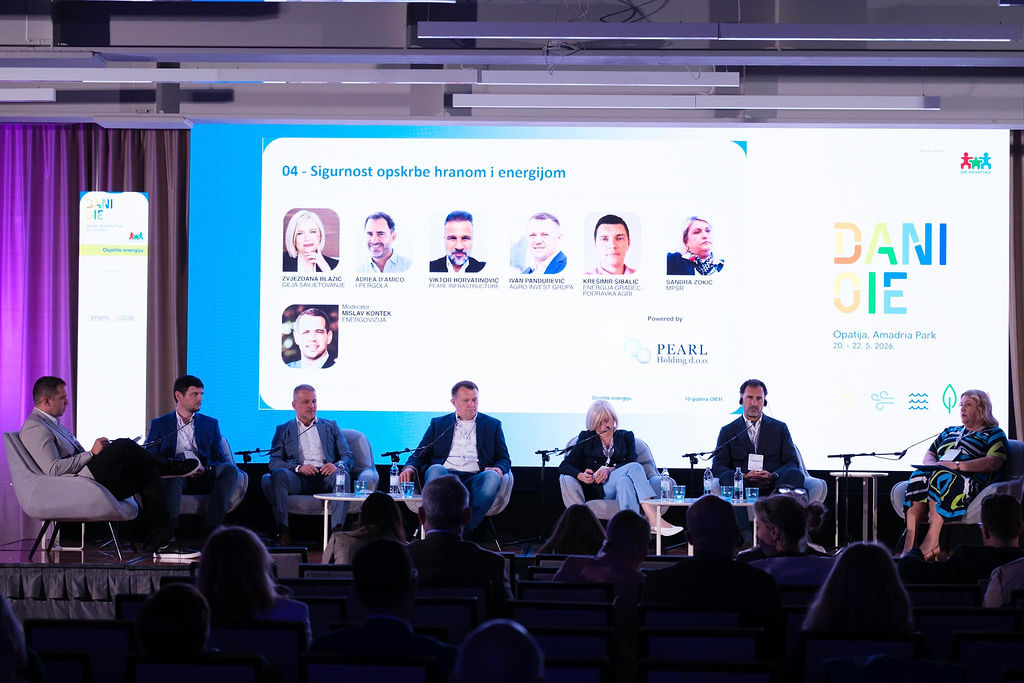
The panel “Security of Food and Energy Supply” explored the integration of agriculture, energy, and rural development. Viktor Horvatinović, Director of Pearl Infrastructure, presented projects combining renewable energy sources and agricultural production through the use of thermal energy from biomass. As examples, he highlighted heating of greenhouses and “underground asparagus heating”, emphasizing that such systems enable more stable and natural food production.
Sandra Zokić, Director of the Directorate for Agricultural Land, Plant Production and Market at the Ministry of Agriculture, Forestry and Fisheries, announced that Croatia could amend its legislative framework for agrivoltaics in order to enable the development of such projects on agricultural land, provided that agricultural production is maintained.
– If agrivoltaics support and protect agricultural production, legislation will move in that direction – Zokić stated.
Economic analyst Velimir Šonje from Arhivanalitika warned that Croatia is expected to experience slower economic growth than in previous years, and that energy prices will be among the key factors shaping economic trends.
– Energy prices are far more important for GDP than interest rate costs – Šonje said. He recalled that in recent years Croatia had simultaneously benefited from joining the Schengen Area, strong inflow of EU funds, and favourable interest rates, which contributed to GDP growth of around 3.4%.
– That will certainly not be the case this year. I expect growth between 2% and 2.5% – Šonje added.
Throughout the second day of the conference, speakers repeatedly emphasised that energy availability, grid development, and the speed of regulatory decision-making will determine the future development of Croatia’s economy, industry, and digital infrastructure.
Participants agreed that Croatia has significant potential for the development of renewable energy sources, data centres, and new industries, but also stressed that the realisation of such projects will require faster grid development, a predictable regulatory framework, and stronger cooperation between the state, investors, and local communities.
The final day of the conference will be dedicated to the Renewables for All project, aimed at bringing renewable energy closer to citizens, small businesses, and cities. Through panel discussions and conversations, the program will demonstrate how the future of energy lies in smart energy management and energy production where it is needed most – within local communities.






 25°C
25°C


Podržavaju nas