SOLAR FLEX CROATIA 2026
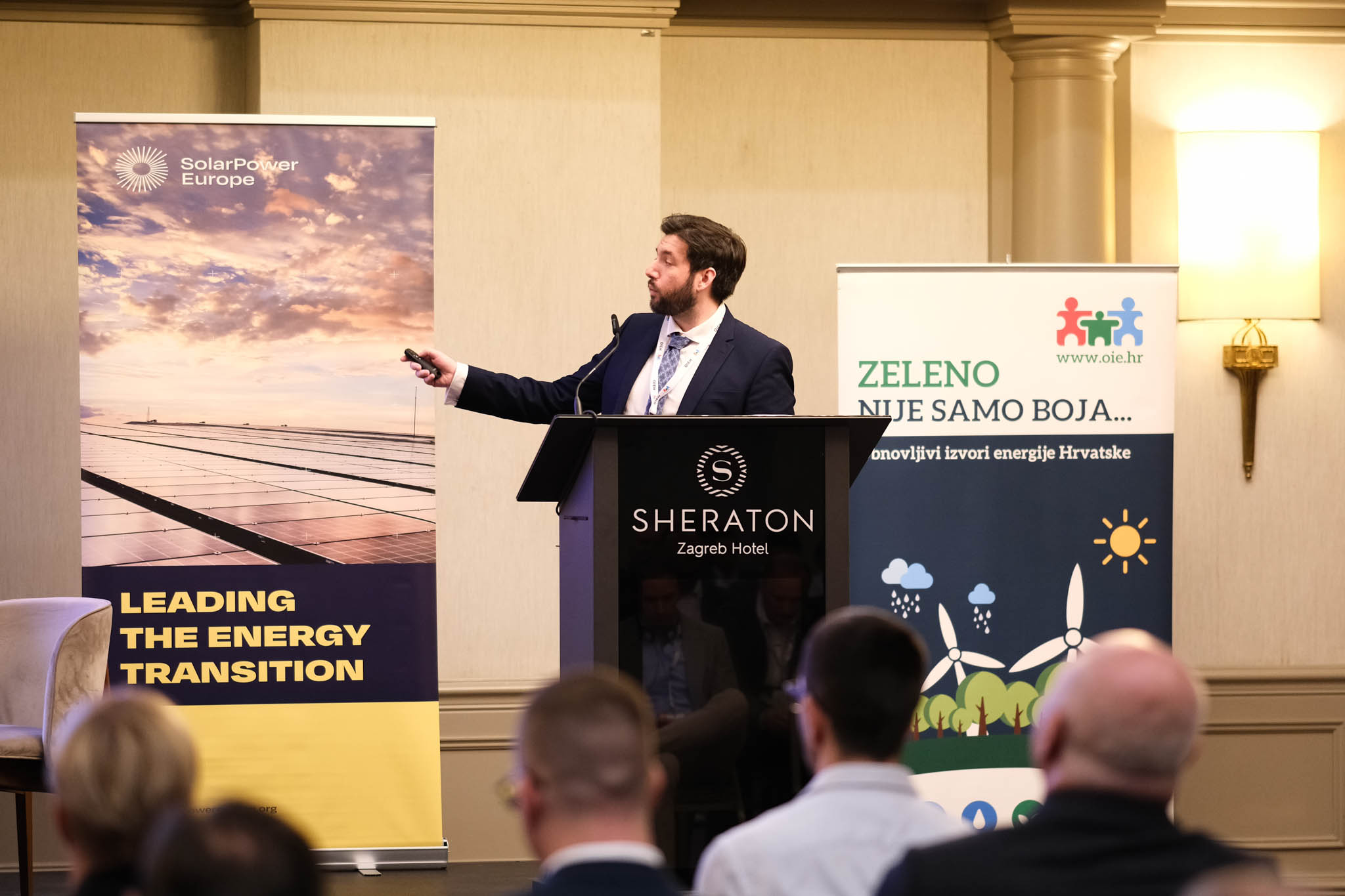
As part of the European Let’s Flex campaign launched in 2025 by SolarPower Europe, the 2nd European Conference Solar Flex Croatia 2026 will be held on 17 March 2026 at the Sheraton Hotel in Zagreb. The conference is jointly organised by Renewable Energy Sources of Croatia (OIEH) and SolarPower Europe (SPE).
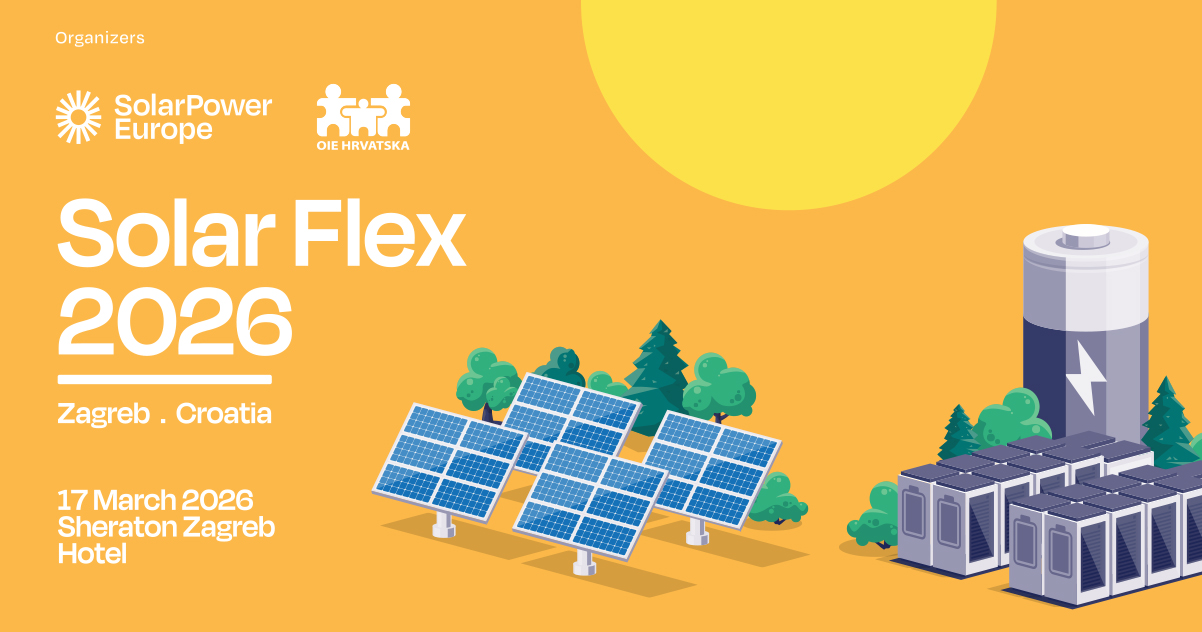
Solar Flex Croatia 2026 connects analysis, practice, and policy for a more flexible power system.
Conference Program
DOWNLOAD THE DETAILED AGENDA WITH PANELISTS AND SPEAKERS IN THE PDF BELOW
CRO Flex: From Grid Congestions to Battery Solutions
The central part of the conference is dedicated to the national study “Identification of Congestion Locations in the Electricity Grid and Battery Energy Storage Needs in the Republic of Croatia”, prepared by the Energy Institute Hrvoje Požar (EIHP) and the Faculty of Electrical Engineering and Computing (FER) of the University of Zagreb, with support of the European Bank for Reconstruction and Development (EBRD).
The aim of the study is to identify critical grid congestion points in the Croatian power system and to define the need and optimal locations for battery energy storage systems. In addition to technical solutions, the study provides recommendations for legislative and regulatory framework amendments necessary for the effective integration of battery systems, their market viability, and further integration of renewable energy sources into the grid. Through presentations and a panel discussion, the session will lay the foundations for a broader debate on system flexibility, the role of batteries in renewable energy integration, and the future development of Croatia’s electricity network.
Energy Storage: Beyond Batteries
Through examples of technologies and systemic solutions, this part of the conference broadens the perspective beyond battery systems and opens discussion on the role of reservoir and pumped-storage hydropower plants, hydrogen, thermal energy storage, and the integration of biomethane and hydrogen into the gas network. The focus is on their role in managing variable generation from renewable sources, reducing peak loads, and increasing the reliability of the energy system.
The objective is to demonstrate how different energy storage technologies can jointly contribute to a more stable, resilient, and efficient system based on renewable energy sources, as well as how their coordinated deployment can support long-term decarbonisation, energy self-sufficiency, and security of supply.
Active Consumers: Contributing to a More Flexible Grid
The third part of the conference places consumers at the centre of the energy system – from industry and businesses to households. Through practical examples, it explores the role of active consumers in enhancing grid flexibility, including demand response, virtual power plants and aggregators, battery systems, heat pumps, microgrids, and integration of generation and consumption at the point of use.
In addition, the concept of a green tariff model will be presented, designed for active customers and consumers who simultaneously produce, exchange, and consume electricity. Such a model creates space for fairer network tariffs, encourages local energy production and consumption, and enables more efficient integration of distributed renewable energy sources into the power system.
What is flexibility?
2nd European Conference Solar Flex Croatia 2026
The conference is focused on enhancing power system flexibility through the wider deployment of energy storage systems, enabling safer and more efficient integration of an increasing share of renewable energy into the grid. At the same time, the conference serves as a platform for exchanging knowledge, experiences, and best practices in flexibility and energy storage, as well as for connecting with policymakers, regulators, industry stakeholders, and potential business partners.
Join us at Solar Flex Croatia 2026
and be part of the solution for the energy system of the future!
REGISTRATION FEES
Download the full agenda
Conference patrons


gold sponsor

Silver sponzors



Bronze sponsors



Networking sponsors





Conference partners
Media coverage





Solar Flex Croatia 2025 was the first national conference dedicated to power system flexibility, organized by Renewable Energy Sources of Croatia. It was held as part of the European Let’s Flex campaign, led by SolarPower Europe, making Croatia the first country to present this initiative through a national event. The conference served as a reference model for the continuation and expansion of the initiative in other EU member states, including the Czech Republic and Italy, which launched their own editions of the Solar Flex conference this year.
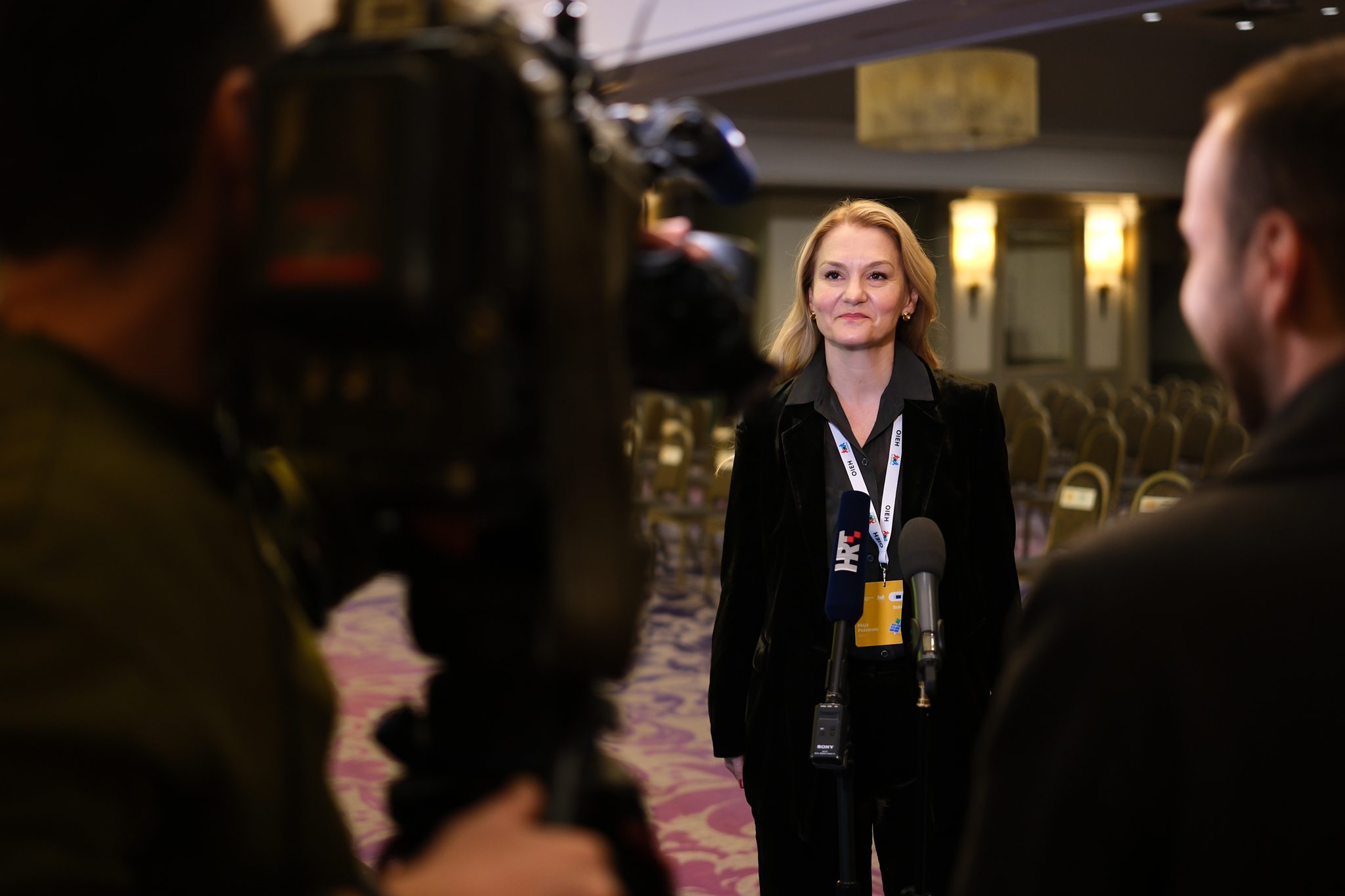
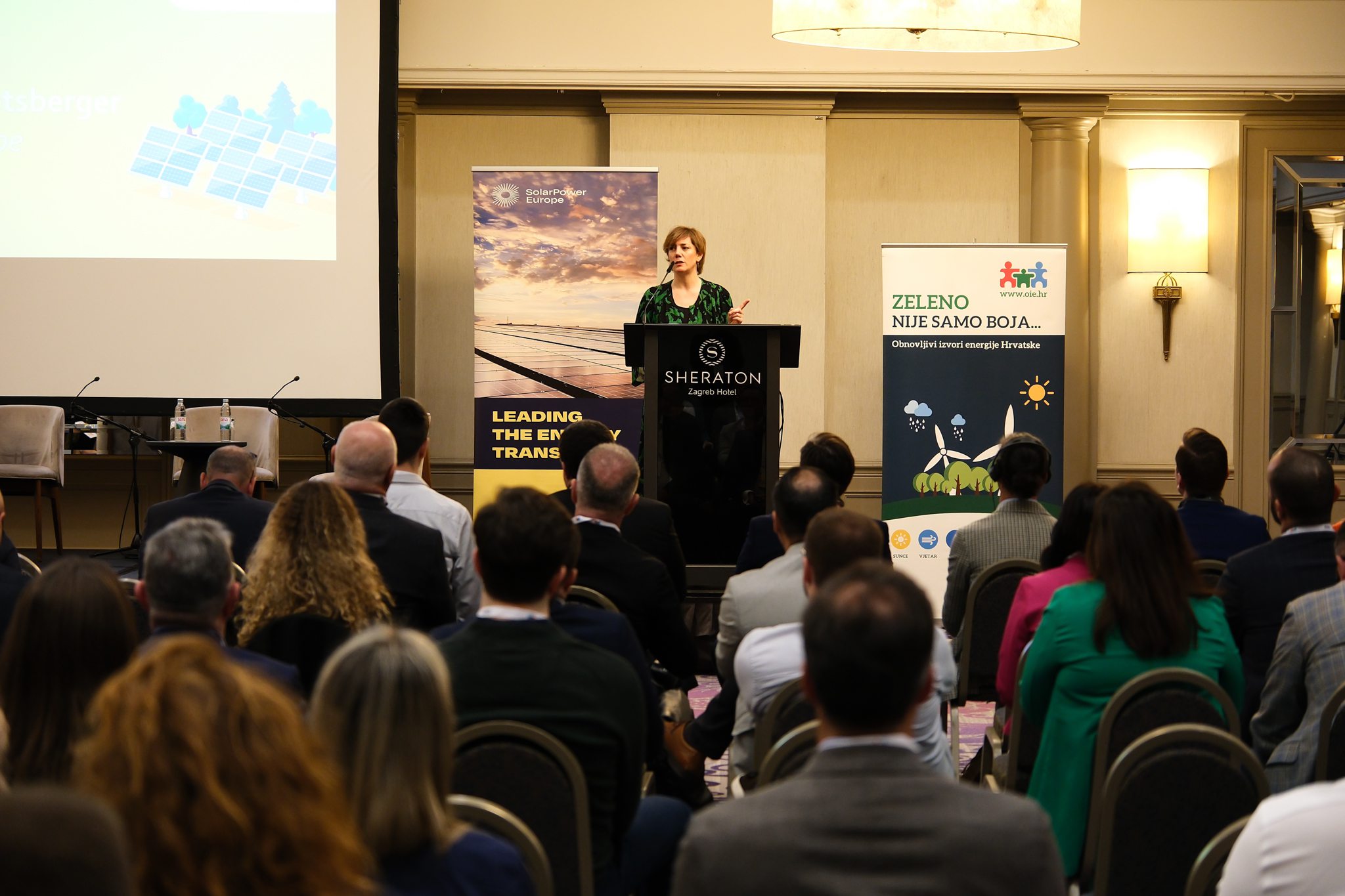
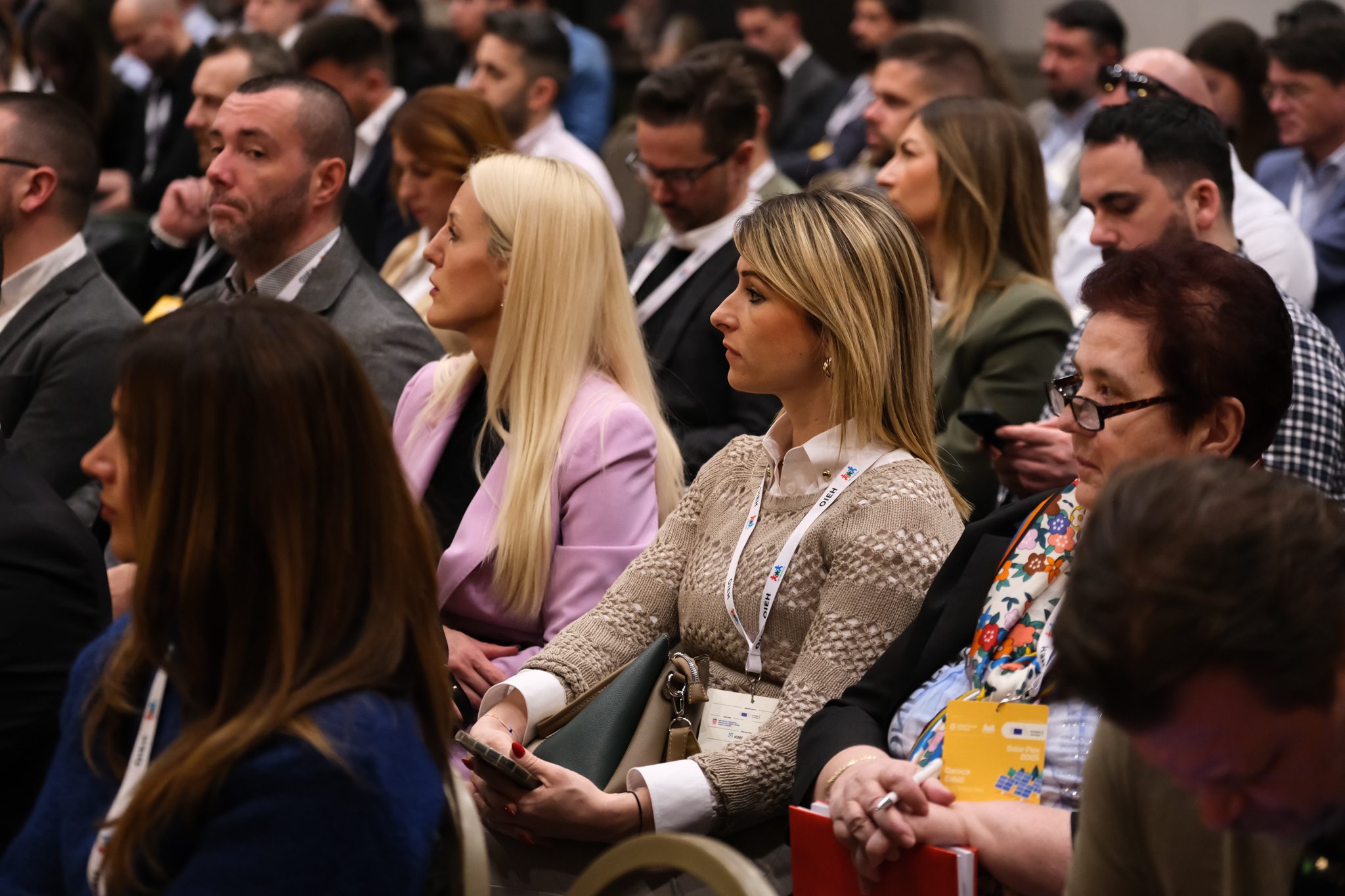
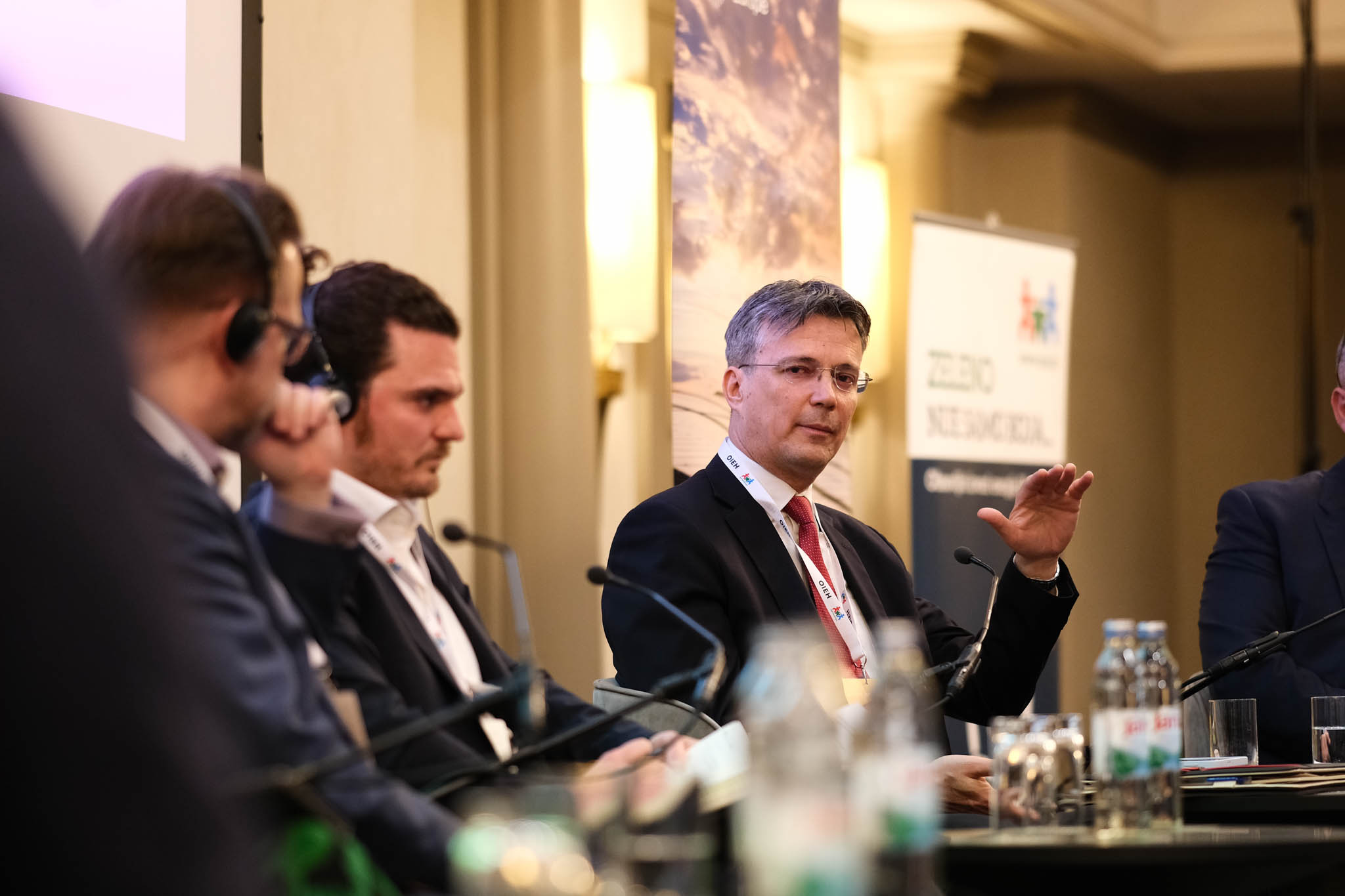
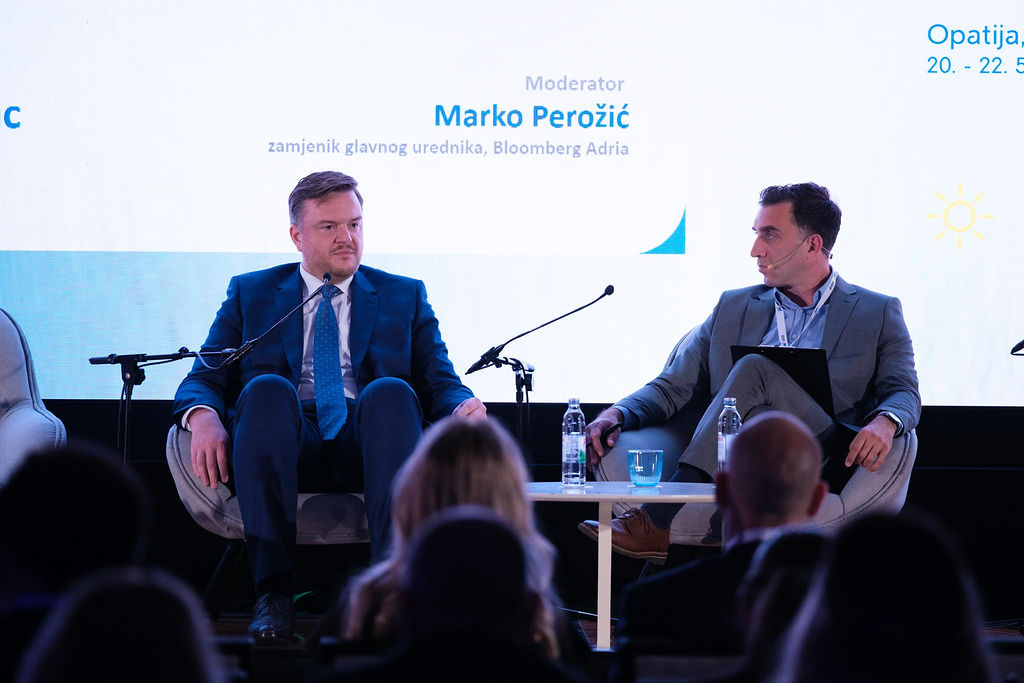
The inaugural edition brought together over 300 participants from industry, the financial sector, regulatory bodies, and relevant institutions, confirming the need for a structured discussion on grid flexibility, energy storage, and renewable energy integration. Below, we share photos and video from Solar Flex Croatia 2025, which best capture the atmosphere, discussions, and key moments of the conference.